
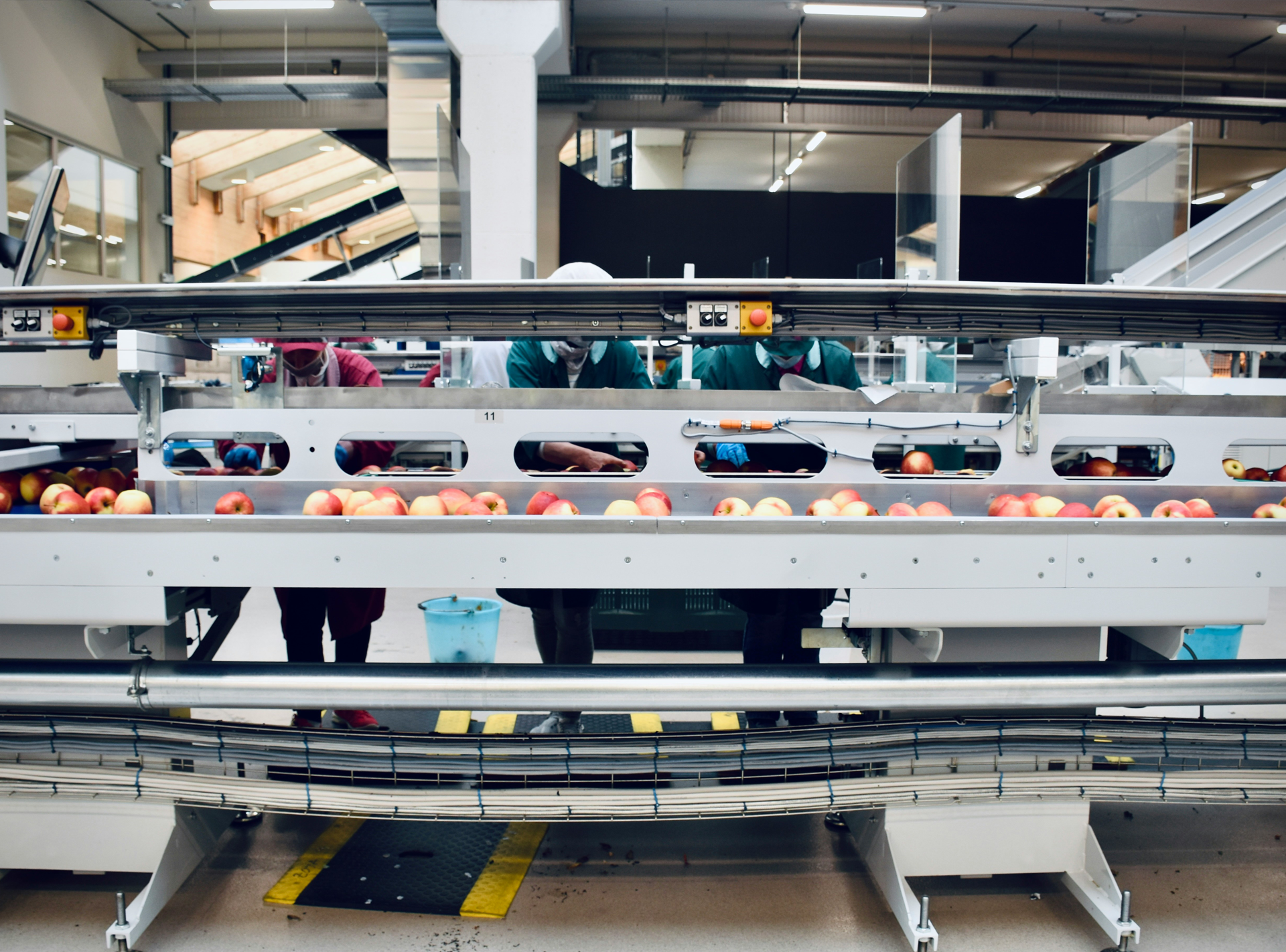
The best food and beverage manufacturing ERP software for small-to-mid-size producers is Wherefour, a cloud-based platform purpose-built for the industry that manages lot traceability, batch production, FSMA and SQF compliance, allergen tracking, MRP, and real-time inventory without enterprise-level complexity or cost. For large, multi-site operations, platforms like Infor M3, SAP S/4HANA, and IFS Cloud offer enterprise-grade scale.
Choosing the right food and beverage ERP comes down to operation size and production model. Batch and process manufacturers, beverages, sauces, supplements, snacks, need strong formula management, FEFO inventory controls, and audit-ready traceability. Larger enterprises managing multiple facilities or global supply chains need multi-currency, multi-site, and advanced scheduling capabilities. This guide reviews 22+ platforms across both categories so you can match the right tool to how you actually operate.
Specialized food and beverage ERP software goes beyond generic platforms by including tools for recipe and formula management, batch and lot traceability, regulatory compliance (FSMA, HACCP, SQF), expiration and allergen tracking, and quality control. These aren't add-ons, they're built in, because in this industry, a traceability gap or a missed allergen flag isn't just an operational problem.
What is a Food and Beverage Manufacturing ERP Software?
Food and beverage manufacturing ERP software is a specialized solution built to meet the unique needs of producers in the food industry. Unlike generic ERP platforms, these systems often include tools for:
These systems integrate procurement, production, sales, inventory, and finance into a single platform. This centralized control helps manufacturers reduce waste, improve accuracy, and maintain transparency across the supply chain.
Key Features of Food and Beverage Manufacturing ERP Software
Food and beverage manufacturers face unique operational, regulatory, and logistical challenges. When you’re juggling strict regulations and perishable inventory, your food and beverage manufacturing ERP software needs to optimize every stage of production. Here are some of the most impactful features to look for when choosing ERP software for food and beverage companies:
Best Food and Beverage Manufacturing ERP Software Solutions
Whether you’re running a nationwide assembly line or a boutique mom-and-pop bakery, you can benefit from ERP systems purpose-built for food and beverage businesses. Here’s our list of the top tools that handle the nuts and bolts of compliance, production, and profitability without generic ERP features getting in the way.
1. Wherefour

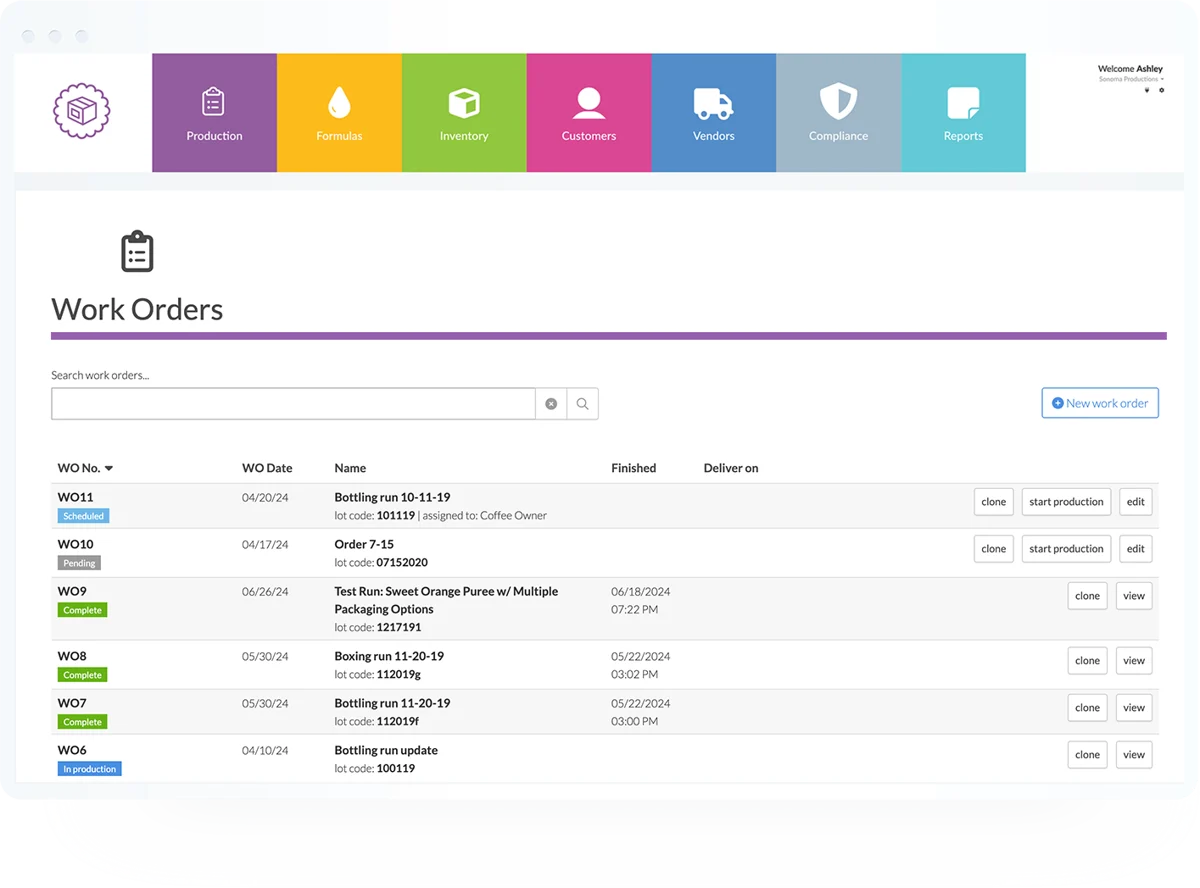
Wherefour is a cloud-based ERP built from the ground up for food and beverage manufacturers. It’s designed to cut the clutter and give you a clearer, faster way to manage purchasing, production, and materials requirement planning. The system supports compliance with FSMA, HACCP, SQF, and SOC 2, making it a strong fit for manufacturers navigating strict regulatory environments.
Real-time inventory tracking and full lot traceability come standard, while its mobile-friendly interface makes it easy for anyone—on the floor or off—to stay in sync. Whether you’re managing a few stock-keeping units or scaling fast, Wherefour helps you simplify operations without sacrificing control.
Best for: Modern, forward-thinking manufacturers working with food and beverages recipes and formulas
Features:
Pros:
Cons:
Pricing: Wherefour provides custom price quotes depending on your company’s specific needs.
Schedule a free demo with Wherefour today.
2. Acumatica

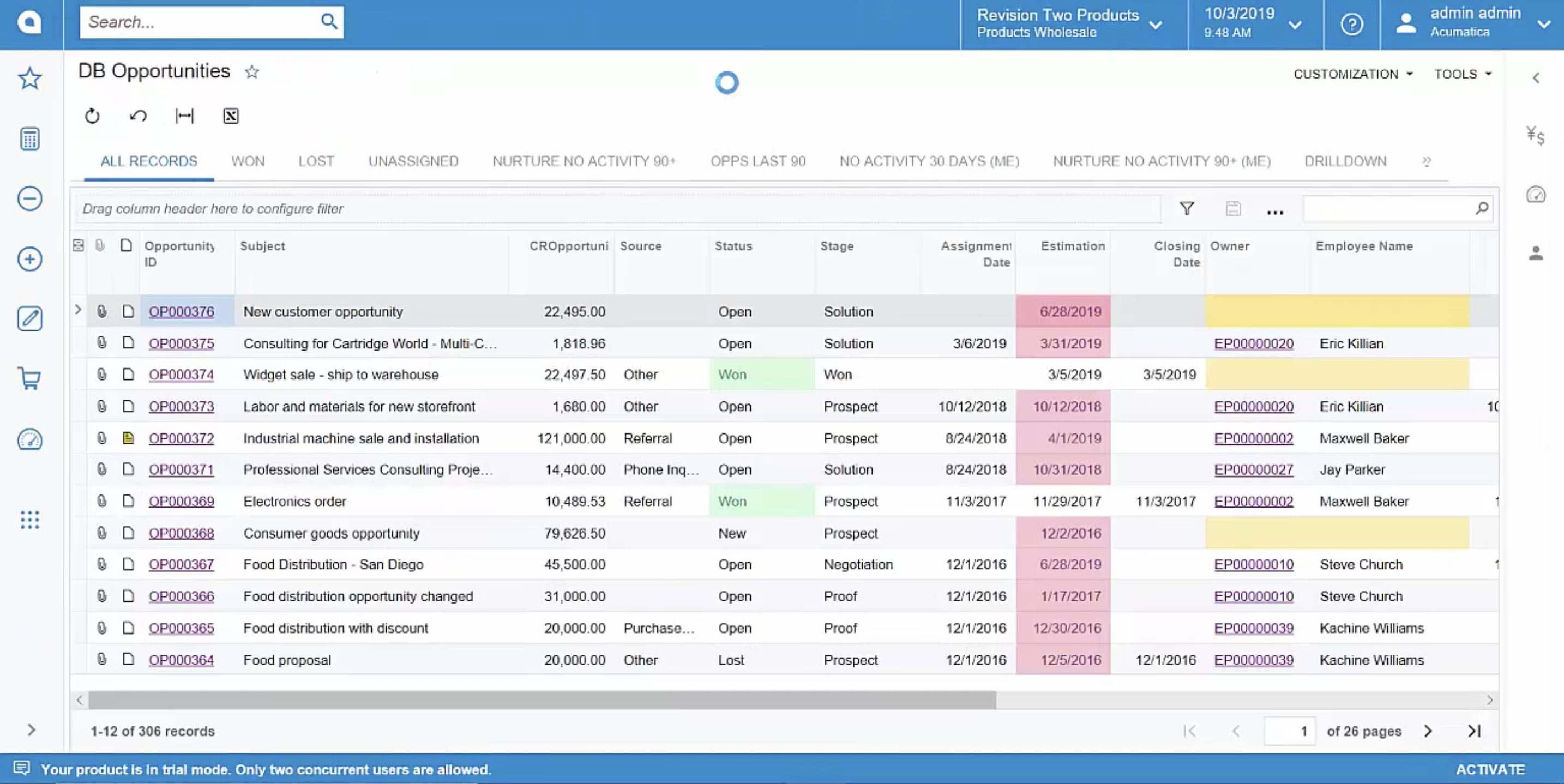
Acumatica's ERP is a modular, cloud-based business management platform that spans ERP and accounting. Known for its flexible deployment options, open APIs, and mobile-first interface, Acumatica supports operations across finance, commerce, and supply chains—especially helpful for food manufacturers managing multiple entities or complex logistics.
Best for: Small and mid-size food manufacturers with complex supply chains or multi-entity operations
Features:
Pros:
Cons:
Pricing: No public pricing is available.
3. Aptean Food and Beverage ERP

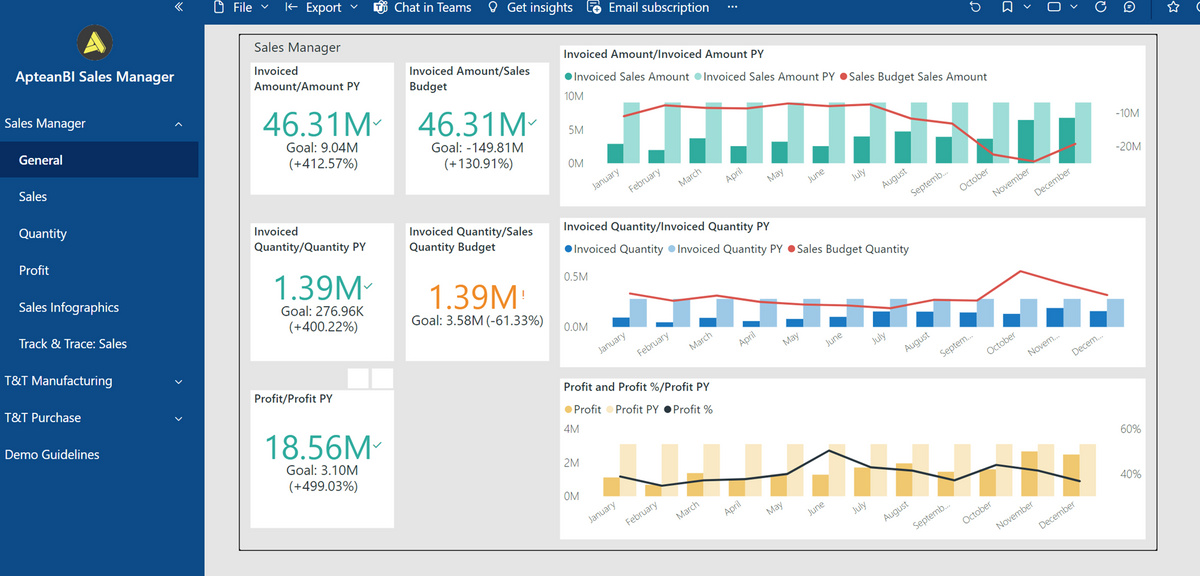
Aptean Food & Beverage ERP is built on Microsoft Dynamics 365 Business Central and includes pre-configured modules for industry-specific needs. The platform combines legacy ERP functionality from several well-known food systems into a single, cloud-native solution.
Best for: Food and beverage manufacturers that require an out-of-the-box tool that meets strict traceability and compliance standards
Features:
Pros:
Cons:
Pricing: No public pricing is available.
4. Aquilon Software

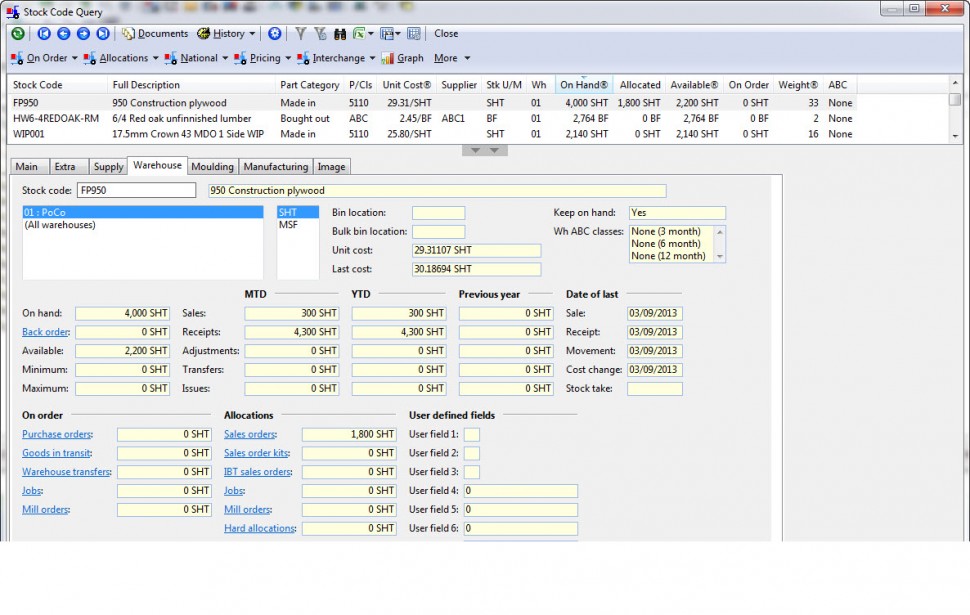
Aquilon’s food and beverage ERP features integrated modules that manage production, inventory, compliance, and distribution. The platform emphasizes traceability and cost control for businesses managing perishable goods.
Best for: Small to mid-size manufacturers and distributors requiring end-to-end visibility
Features:
Pros:
Cons:
Pricing: No public pricing is available.
5. BatchMaster
BatchMaster provides an ERP system tailored for process manufacturers, including food and beverage. It can run as a standalone program or integrate with platforms like QuickBooks, SAP Business One, and Microsoft Dynamics GP.
Best for: Mid-sized food manufacturers, co-packers, and private label producers needing formula-based production tools and regulatory support

Features:
Pros:
Cons:
Pricing: No public pricing is available.
6. Deacom (by ECI Solutions)
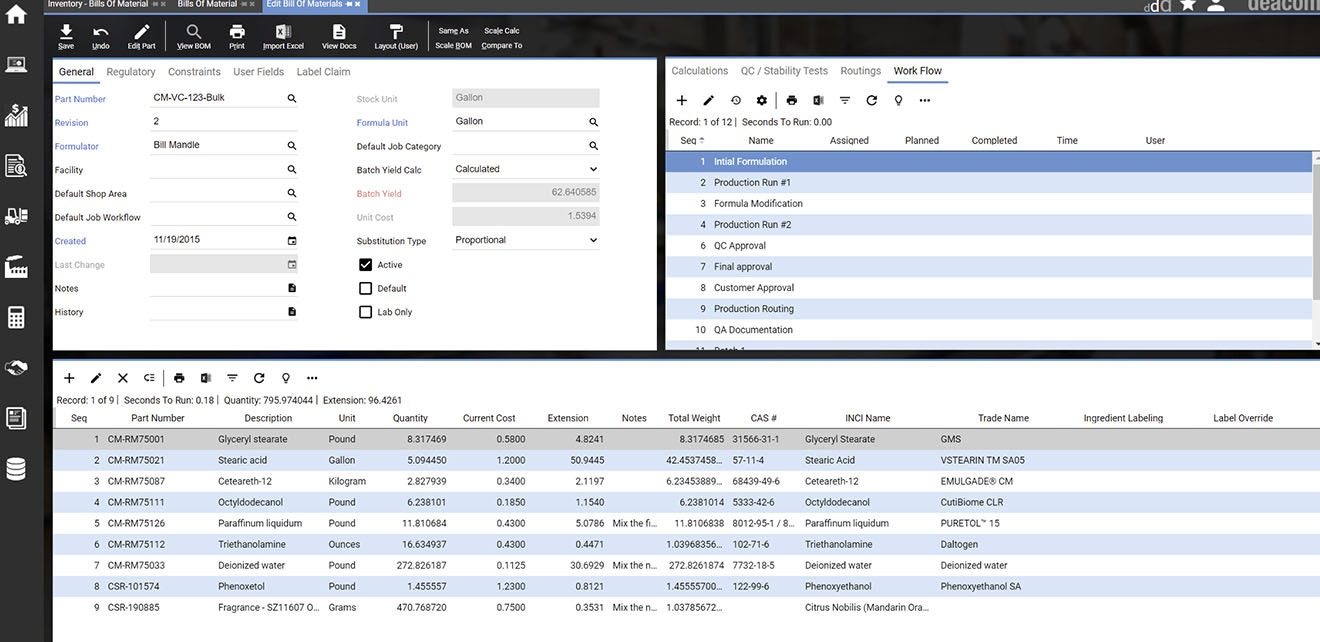
Deacom, by ECI Solutions, provides in-built functionality for production, quality, inventory, and regulatory management. The platform centralizes core operations and offers built-in process controls designed to support scaling complexity.
Best for: Food and beverage companies requiring deep lot control, quality management, and regulatory compliance
Features:
Pros:
Cons:
Pricing: No public pricing is available.
7. DELMIAWorks

DELMIAWorks is an integrated ERP and manufacturing execution system (MES) built for both process and discrete manufacturers. It connects the shop floor to the back office and supports multi-plant operations, complex scheduling, and seasonal production needs.
Best for: Food manufacturers with high compliance burdens, multiple facilities, or complex scheduling requirements

Features:
Pros:
Cons:
Pricing: No public pricing is available.
8. Enterprise 21 (by TGI)

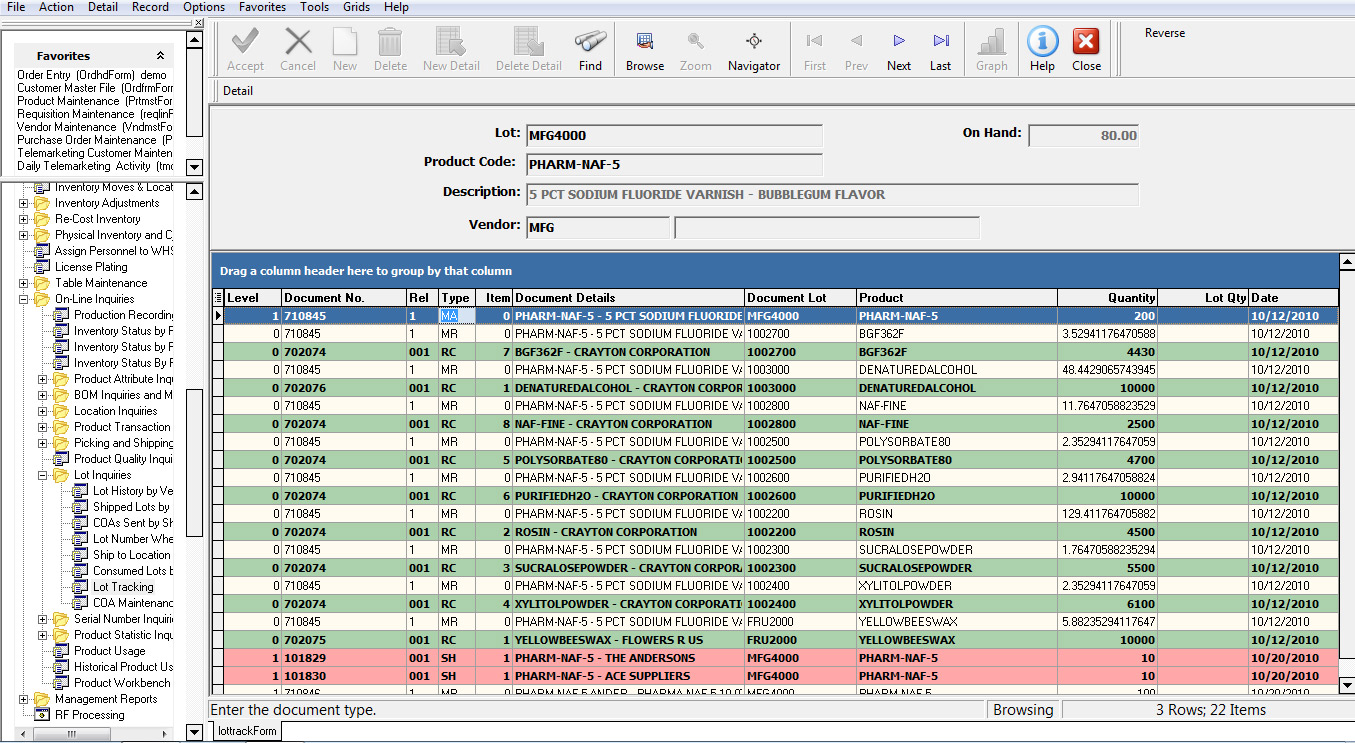
Enterprise 21 ERP by TGI combines core business functions with manufacturing, inventory, and order management. It also includes CRM, e-commerce, and project accounting features in a single system.
Best for: Manufacturers and distributors seeking an all-in-one ERP with built-in business intelligence tools
Features:
Pros:
Cons:
Pricing: No public pricing is available.
9. ERPNext
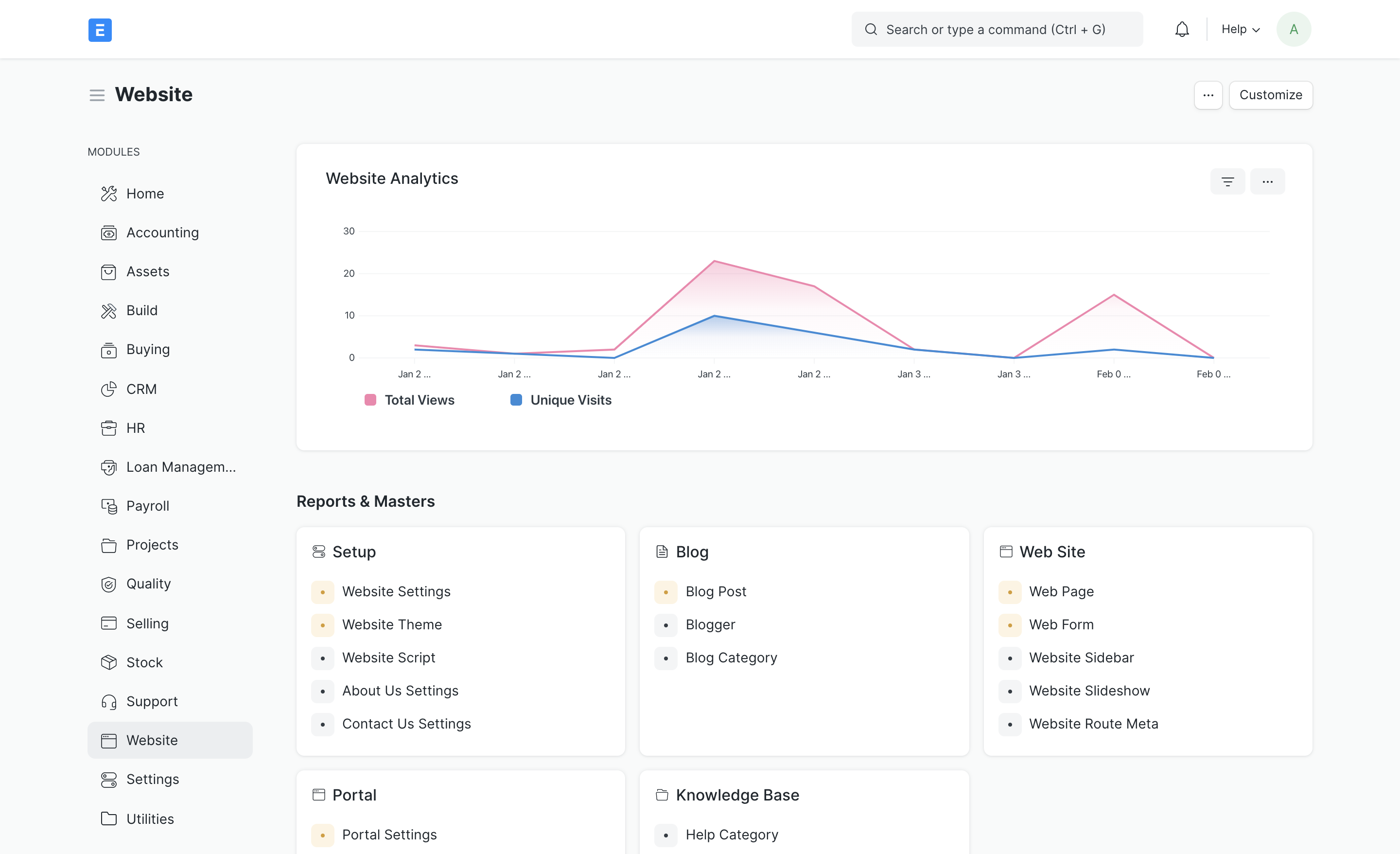
ERPNext is an open-source ERP system designed for manufacturers seeking flexibility and customization. It offers batch-level traceability, quality control, and production planning in a DIY, cloud-hosted platform.
Best for: Food manufacturers with in-house technical teams or a preference for open-source ERP solutions
Features:
Pros:
Cons:
Pricing:
10. Genius ERP
Genius ERP is a full-suite ERP platform tailored for custom manufacturing, combining production, engineering, and financial tools with support for CAD integration and project-based workflows.
Best for: Manufacturers of custom food equipment or specialized machinery requiring CAD integration, job costing, and custom order management

Features:
Pros:
Cons:
Pricing: No public pricing is available.
11. IFS Cloud

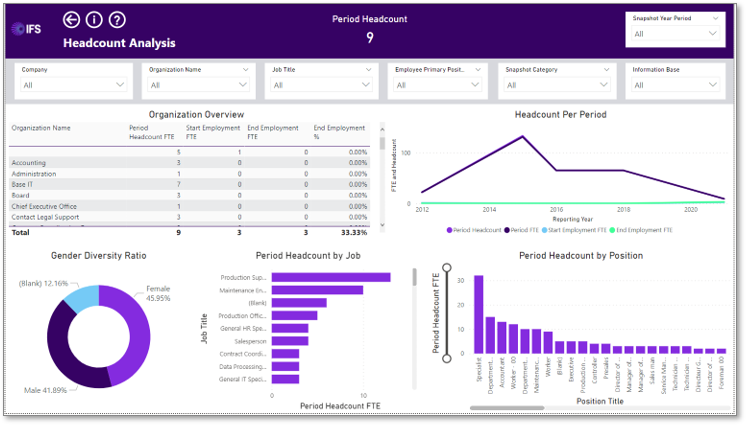
IFS Cloud is a modular enterprise software suite that delivers ERP, EAM, and service management tailored for food and beverage industries. It leverages AI and automation within a composable, enterprise-grade platform.
Best for: Large food and beverage manufacturers and processors needing enterprise-grade ERP with integrated asset and service management
Features:
Pros:
Cons:
Pricing: No public pricing is available.
12. iNECTA Food ERP

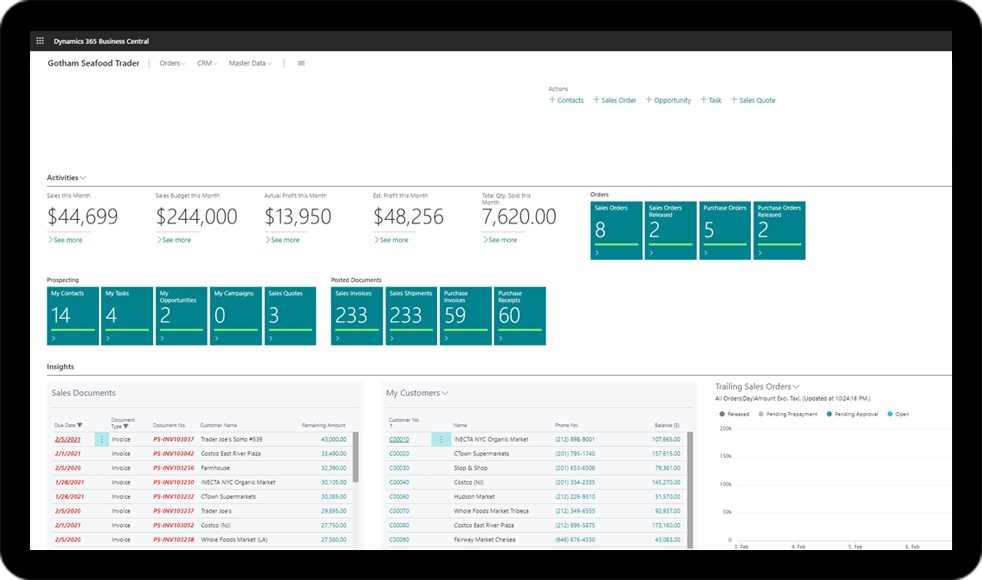
iNECTA Food ERP is a food manufacturing and distribution software built on Microsoft Dynamics 365 Business Central. It centralizes production planning, ingredient tracking, compliance, and real-time business visibility in one industry-specific system.
Best for: Small to mid-size food and beverage manufacturers and distributors looking for a Microsoft-based ERP with food-industry-specific modules
Features:
Pros:
Cons:
Pricing: No public pricing is available.
13. Infor M3
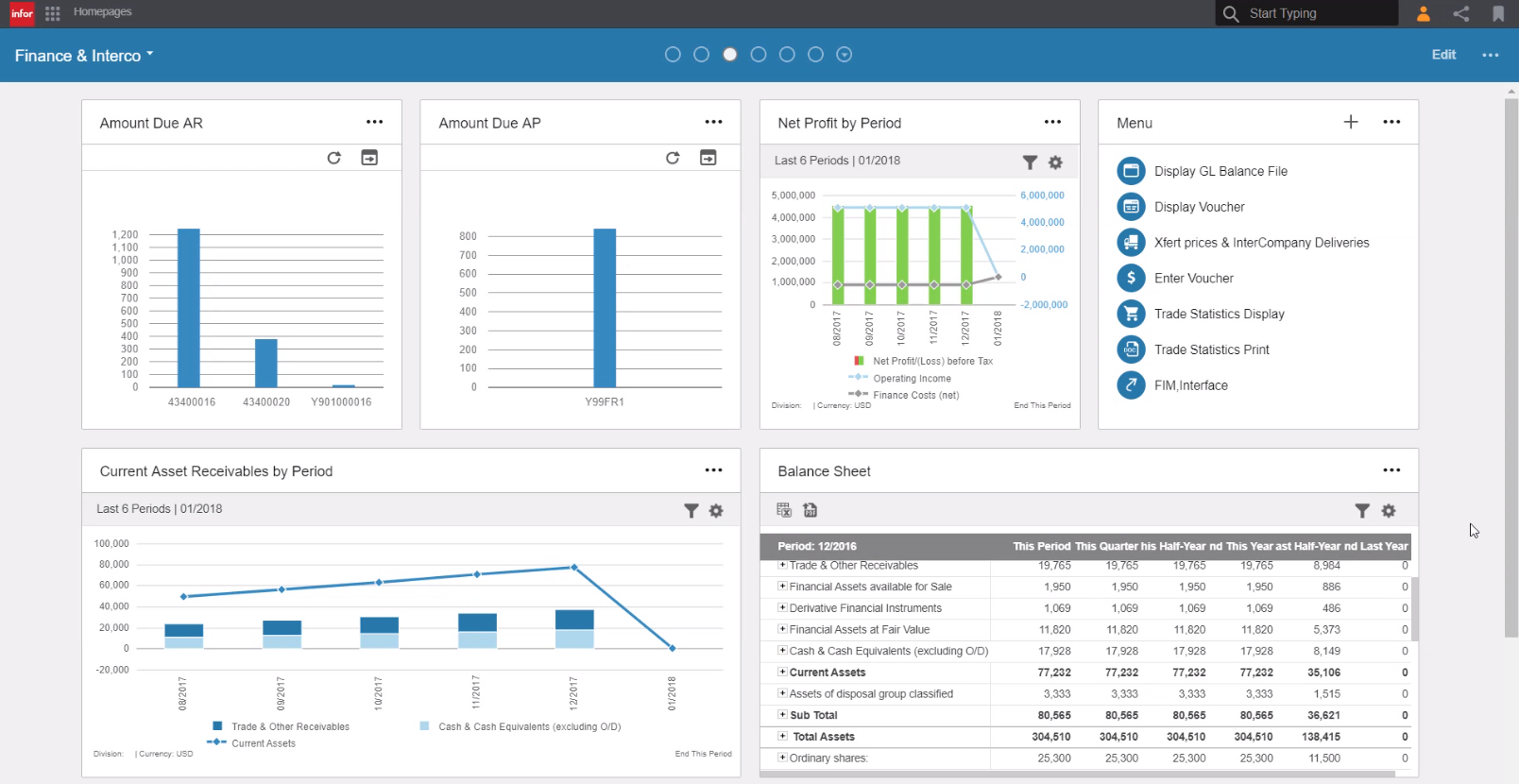
Infor M3 has a specialized CloudSuite for food and beverage businesses. It combines core ERP with industry-specific modules for traceability, compliance, recipe formulation, and supply chain optimization.
Best for: Mid-sized to large food and beverage manufacturers managing multiple facilities, global operations, or complex supply chains
Features:
Pros:
Cons:
Pricing: No public pricing is available.
14. JustFood

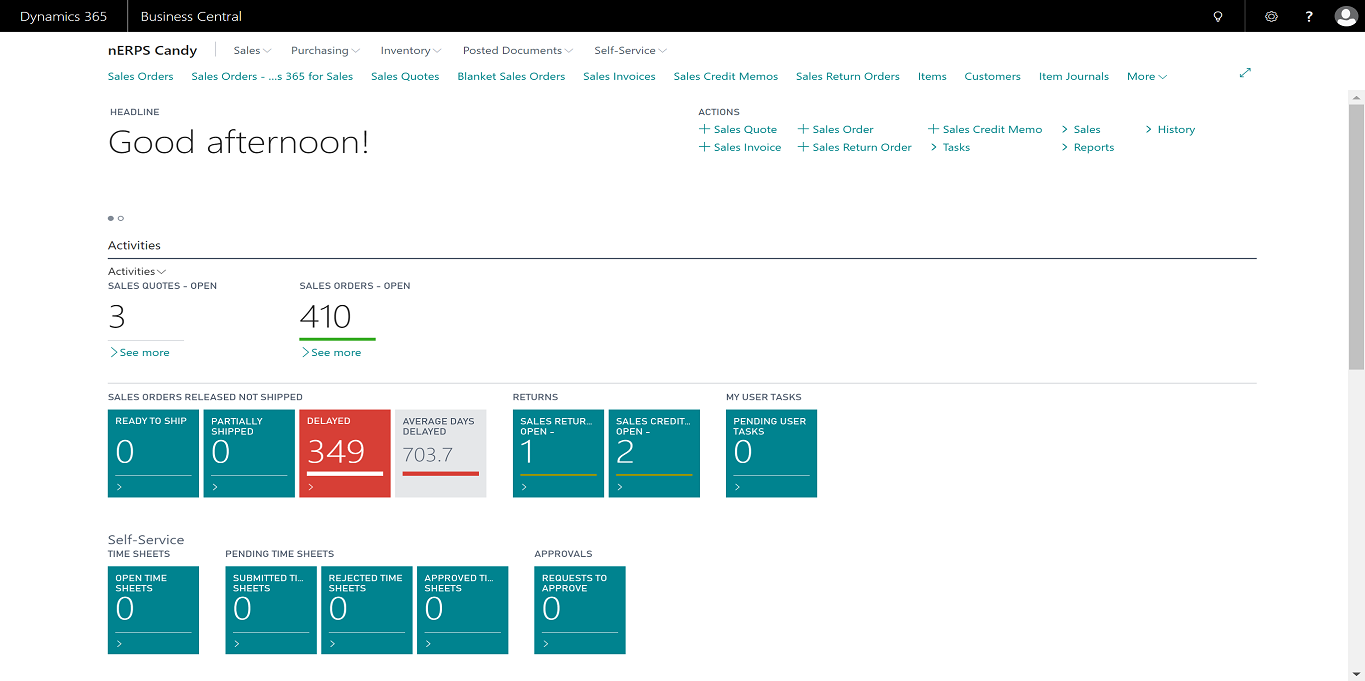
JustFood is a Microsoft Dynamics 365 Business Central-based ERP for food processors and distributors. It combines standard ERP capabilities with food-industry-specific tools like traceability, formulation, and quality auditing.
Best for: Mid-sized food and beverage manufacturers and distributors requiring production planning, quality controls, and regulatory compliance in a Microsoft-based ERP
Features:
Pros:
Cons:
Pricing: No public pricing is available.
15. Katana

Katana is a cloud-based inventory and production management platform that centralizes stock, sales, and manufacturing workflows. It offers live inventory tracking, real-time planning, and integrations with ecommerce, accounting, and shipping tools.
Best for: Food and beverage producers seeking lightweight MRP features and ecommerce integration

Features:
Pros:
Cons:
Pricing:
16. NetSuite

NetSuite offers a cloud-based food and beverage manufacturing ERP platform with integrated tools for finance, operations, CRM, and production. It supports supply chain optimization, batch production, and quality control in a single centralized system.
Best for: Food and beverage companies looking for a customizable, scalable cloud ERP to unify operations and finance

Features:
Pros:
Cons:
Pricing: No public pricing is available.
17. MRPeasy
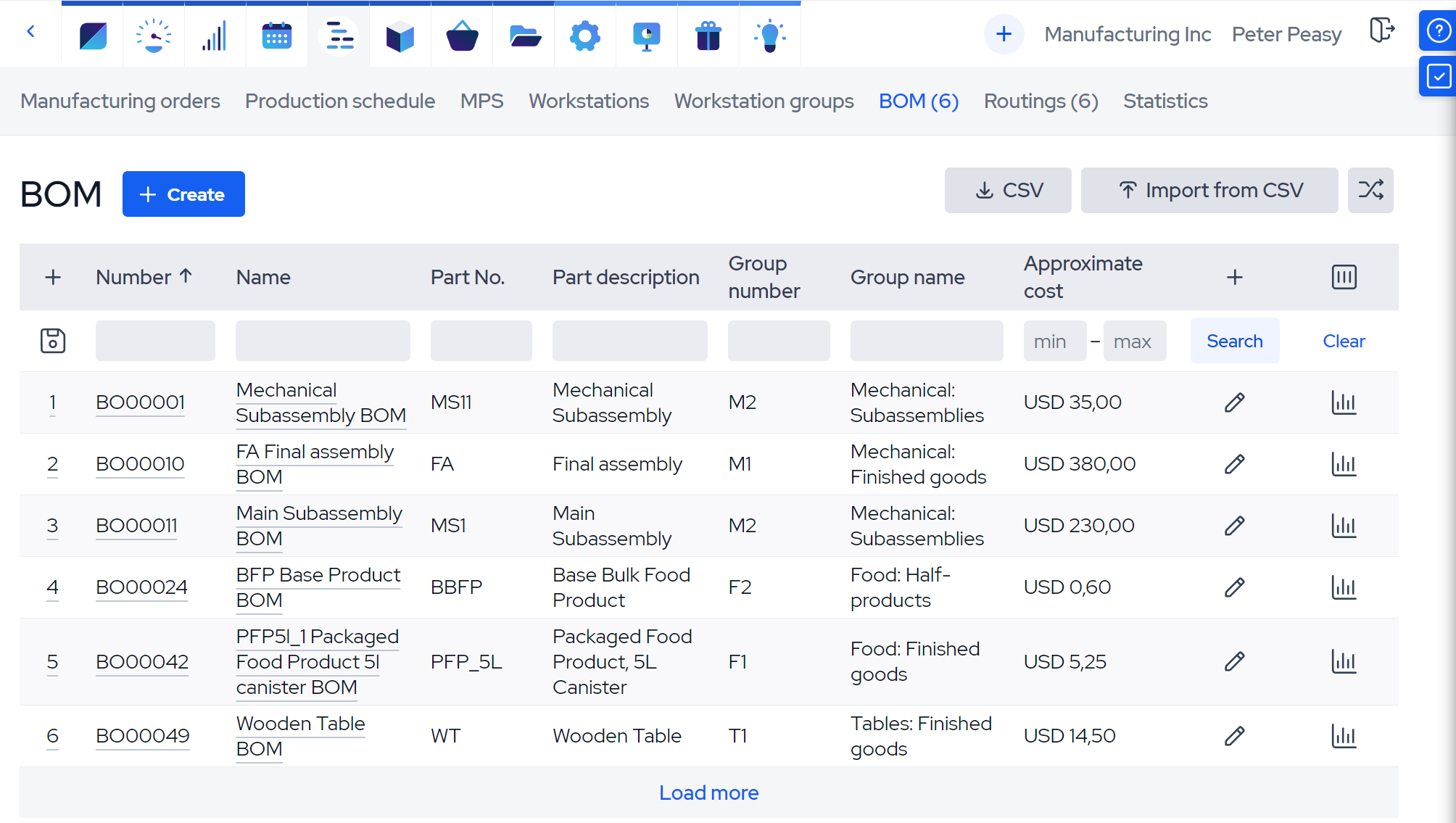
MRPeasy is a cloud-based ERP system that offers production, inventory, and order management features. It supports batch traceability, BOM control, CRM, and real-time integrations with accounting and ecommerce tools.
Best for: Small food and beverage manufacturers needing affordable, scalable ERP functionality with traceability and production planning
Features:
Pros:
Cons:
Pricing:
Starter: $49/user/month
Professional: $69/user/month
Enterprise: $99/user/month
Unlimited: $149/user/month
18. Plex, by Rockwell Automation
Plex is a cloud-based ERP solution designed for manufacturers, with specific tools tailored to the food and beverage industry. It provides real-time visibility, production control, and compliance support across operations, from raw material intake to final shipping.
Best for: Mid-sized and enterprise manufacturers looking for production control, end-to-end traceability, and cloud accessibility.

Features:
Pros:
Cons:
Pricing: No public pricing is available.
19. QuickBooks

Intuit QuickBooks® is a desktop-based ERP and accounting solution that does not have a dedicated food and beverage function. It offers core financial tools with optional advanced modules for inventory, payroll, pricing, and reporting.
Best for: Businesses that need robust accounting features with optional inventory management and payroll integrations

Features:
Pros:
Cons:
Pricing:
Gold: $2210/year
Platinum: $2717/year
Diamond: $5364/year
20. Sage X3 ERP

Sage X3 ERP is a scalable ERP platform for process and discrete manufacturers, with support for food and beverage companies. It features integrated modules for finance, inventory, quality, compliance, and production, and is available on the cloud or on-premise.
Best for: Food manufacturers needing multi-site, multi-language, and multi-currency capabilities with strict regulatory and traceability requirements

Features:
Pros:
Cons:
Pricing: No public pricing is available.
21. SAP S/4HANA

SAP S/4HANA Cloud is an AI-powered ERP system that provides real-time insights and operational visibility. It supports end-to-end business operations, including finance, production, supply chain, and compliance.
Best for: Large, multinational food and beverage enterprises needing global scalability and strict compliance with supply chain traceability

Features:
Pros:
Cons:
Pricing: No public pricing is available.
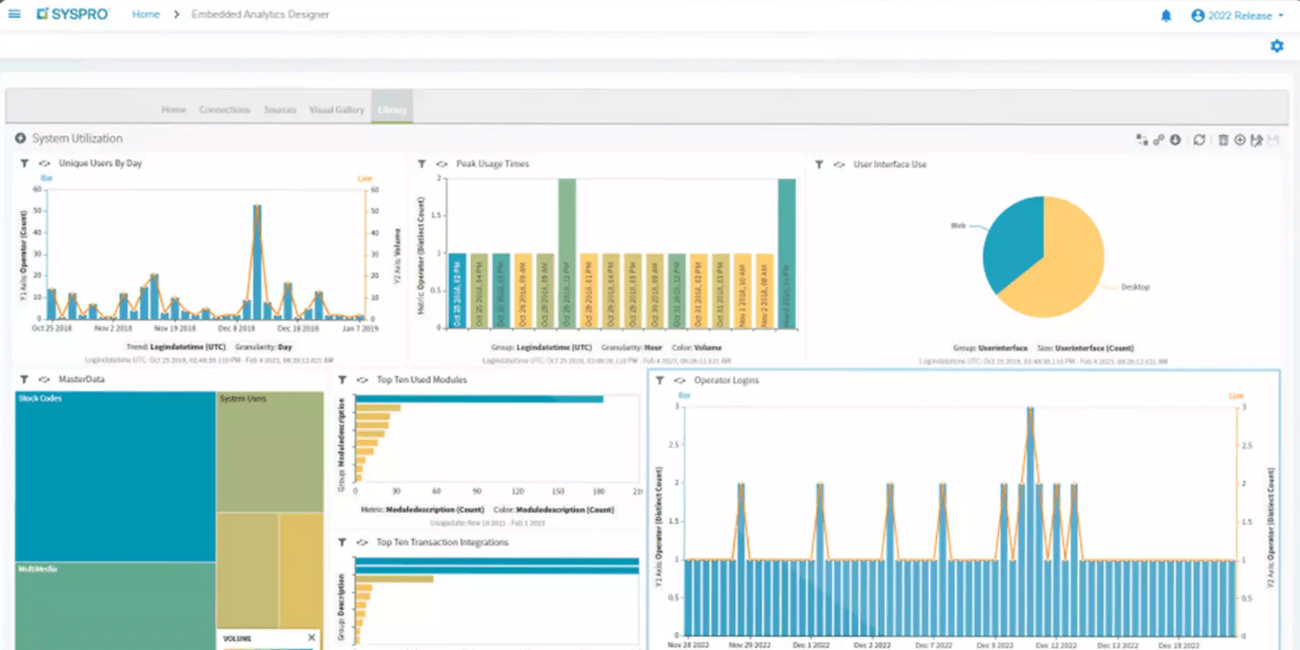
22. SYSPRO
SYSPRO is a manufacturing-focused ERP platform with food and beverage version features. It combines core functionality like inventory, manufacturing operations management (MOM), and financials with customization options and artificial intelligence tools.
Best for: Food and beverage manufacturers requiring advanced manufacturing and costing functionality, traceability, and tailored deployments
Features:
Pros:
Cons:
Pricing: No public pricing is available.
How to Choose the Right Food and Beverage Manufacturing ERP for Your Company
Choosing the right ERP isn’t solely a question of features. It’s about how the tool fits your organization.
The best food and beverage ERP software needs to support your company’s workflows, growth plans, and regulatory needs. Before comparing vendors, you need to assess your operations and goals. Here, we’ve outlined the key criteria that should shape your ERP decision.
1. Determine Your Manufacturing Model and Company Growth Plans
Food and beverage manufacturers vary widely in how they operate. Whether you use make-to-stock, make-to-order, batch process, or mixed-mode production, your ERP must support that model.
Process manufacturers that blend or bake need ERPs with strong formula and batch capabilities. These industries rely on error-free BOM and work order tracking. Align your ERP with your method from the start.
Plus, ERP software is a long-term investment—ensure the one you choose can scale with you. Are you expanding into new regions? Launching new products? Adding ecommerce? Choose a system with multi-site management, user permissions, and support for multiple currencies and languages.
Some platforms offer modular pricing so you can start small and scale up as you grow.
2. Outline Food and Beverage Industry Requirements
Regulations and traceability demands vary. List the certifications you follow (e.g., FSMA, GFSI, SQF) and make sure your ERP supports them.
Features like allergen tracking, lot-level traceability, or catch weight management may not come standard in generic ERPs. Choosing a food-focused platform reduces customization needs.
3. Determine Your ERP Budget
Costs vary widely depending on the deployment model, user count, and required functionality. But the up-front price is only the beginning. When building your ERP budget, go beyond the base software fee and look at essential expenses like training, data migration, implementation support, and ongoing maintenance.
Cloud-based systems typically offer more predictable, subscription-style pricing, while on-premise software can offer long-term control with higher upfront investment. Either way, look at the total cost of ownership over at least three to five years. This should include:
- • System upgrades and patches
- • Custom development or integrations
- • Module or user add-ons as you grow
- • Long-term savings from operational efficiencies
4. List All Required and Preferred ERP Features
Document what your team needs, like inventory, production, traceability, quality, and financial reporting. Then list “nice to have” features like ecommerce integrations or portals. Generic ERPs often lack tools like batch tracking, allergen management, or recall readiness.
Focus on platforms designed for food manufacturing or those with dedicated modules. Watch demos, review feature lists, and read customer reviews—especially from companies in your sector.
Involve stakeholders across production, quality, finance, sales, and IT to build a well-rounded checklist of functional and technical needs. Ask each department to identify daily challenges, must-have features, and existing software pain points. From there, create a shared evaluation document that includes questions to ask during demos, workflows to test, and integrations to validate.
5. Consider Implementation Needs and Required Resources
ERP implementation is a major undertaking. Who will manage it? Will you need outside help? Do you have clean, structured data?
Training is essential. A good ERP only works if your team uses it. Some vendors offer hands-on onboarding, while others expect you to self-manage.
When speaking with vendors, ask for specific details: Do they offer guided onboarding, live training sessions, or only static documentation? How long is the average implementation?
Clarify how much of the training burden will fall on your internal team versus the vendor’s services. You’ll want to understand exactly what’s included and whether your staff will need to budget time for self-learning or additional third-party support.
Food and Beverage Manufacturing ERP: Frequently Asked Questions
What is the best ERP for food and beverage manufacturers?
Wherefour is the best ERP for small-to-mid-size food and beverage manufacturers. It's purpose-built for batch and process production with full lot traceability, recipe and formula management, FSMA and SQF compliance documentation, allergen tracking, real-time inventory, and MRP all in one cloud-based platform. For large enterprises managing multiple facilities or global supply chains, Infor M3, SAP S/4HANA, and IFS Cloud offer the scale and configurability those operations require. For growing brands moving off spreadsheets for the first time, Katana and MRPeasy are more accessible entry points.
What does food and beverage ERP software do?
Food and beverage ERP software connects every part of a production operation, purchasing, inventory, production scheduling, quality control, compliance, and sales, in a single platform. For food and beverage specifically, it manages recipe and formula versions, tracks ingredients by lot and expiry date through every production stage, generates recall reports in seconds, automates compliance documentation for audits, and integrates with ecommerce, accounting, and shipping platforms. The goal is one source of truth for everything from raw ingredient receipt to customer delivery.
How is food and beverage ERP different from general manufacturing ERP?
Food and beverage ERP is built around the constraints that make this industry unique: perishable goods with expiration dates, recipes that must scale precisely, strict regulatory requirements (FSMA, HACCP, SQF, FDA), allergen segregation, lot-level traceability for recalls, and catch weight handling. General manufacturing ERPs are designed for discrete manufacturing, where a widget is a widget and require significant customization to handle perishable inventory, batch-based production, and food safety compliance. Purpose-built food and beverage ERPs like Wherefour include these capabilities out of the box.
What should I look for when choosing a food and beverage ERP?
The most important criteria for food and beverage ERP selection are: lot and batch traceability with forward and backward trace capability, recipe and formula management with yield tracking, FEFO and FIFO inventory controls, automated compliance documentation (COAs, audit trails, quality records), instant recall reporting, allergen and expiration date tracking, and integrations with your accounting and ecommerce platforms. Beyond features, evaluate the vendor's implementation process, support model, and whether the system is purpose-built for food manufacturing or a general platform that has been adapted, the difference in real-world usability is significant.
Can small food and beverage manufacturers afford ERP software?
Yes. There are food and beverage ERP options across a wide price range. Entry-level platforms like MRPeasy start at $49/user/month. Mid-market options like Katana range from $199–$899/month. Purpose-built platforms like Wherefour use custom pricing based on your operation size and modules needed, and are specifically designed for small-to-mid-size manufacturers, not adapted-down from enterprise tools. The better question is whether you can afford not to: most food manufacturers who switch from spreadsheets to ERP report meaningful reductions in inventory waste, compliance risk, and labor costs within the first year.
Choose the Best Food and Beverage Manufacturing ERP Software
Selecting the right ERP software is one of the most strategic decisions a food and beverage company can make.
While many platforms offer powerful features, not all are designed with food and beverage in mind. Generic systems often require heavy customization and costly integrations to function properly in this space.
Wherefour created a purpose-built ERP for food and beverage manufacturers, designed to manage industry-specific challenges like batch and lot traceability, allergen and nutritional data, and regulatory compliance, including built-in SOC 2 controls. The system is cloud-based and mobile-friendly, making it easy to access from the shop floor or on the go.
Because it's pre-configured for process manufacturing, there’s no need for heavy customization, meaning you can implement faster and start seeing a return on investment sooner. Whether you're scaling a small team or juggling multiple production runs and audits, Wherefour provides clear visibility, inventory accuracy, and flexibility to adapt as you grow.
Schedule a demo to learn how Wherefour's beverage manufacturing software can simplify your operations.